
ENDOMETRIOSIS — CAUSES, SYMPTOMS & DIAGNOSIS
What causes endometriosis?
The exact cause of endometriosis is not known. Current evidence suggests that it is a complex condition involving a combination of genetic susceptibility, hormonal influences, inflammation, immune-system factors and processes that allow endometrium-like cells to develop outside the uterus.
Several theories have been proposed, including retrograde menstruation, but no single theory explains why endometriosis develops in some people and not others, why it occurs in different parts of the body, or why symptoms vary so widely.
Endometriosis is therefore best understood as a multifactorial disease rather than a condition with one proven root cause.
Genetic susceptibility
Having a close relative with endometriosis increases the likelihood of developing the condition, although no single gene explains most cases.
Hormonal influence
Endometriosis is hormone-responsive, particularly in relation to oestrogen. Hormones influence the activity of endometriosis lesions but do not by themselves explain why the disease begins.
Inflammation & immunity
Research suggests that inflammatory and immune processes may contribute to endometriosis, but the condition is not currently classified simply as an immune deficiency or a single autoimmune disease.

Anti-Parasite Herbal Implant + Sodium Bicarbonate Colonic Irrigation
Specialised anti-parasite herbal colonic irrigation in Holborn, Central London, combining closed-system colon hydrotherapy with Practitioner Supplies Anti-Parasite Tincture and a carefully prepared sodium bicarbonate solution.
The professional herbal blend contains wormwood, German chamomile, walnut leaf and clove bud. Parkland Natural Health has used this Practitioner Supplies formulation for around 20 years. Personal consultation and suitability screening are included. Book online and save 10%.
What is endometriosis?
Endometriosis is a chronic condition in which tissue similar to the lining of the uterus grows outside the uterus. It is not simply normal endometrial tissue that has moved elsewhere.
Endometriosis can trigger inflammation and may lead to scar tissue and adhesions. The condition most commonly affects structures within the pelvis, but it can sometimes occur elsewhere in the body.
The World Health Organisation estimates that endometriosis affects around 10% of women of reproductive age worldwide. Symptoms and their severity vary considerably from person to person.
Endometriosis symptoms
Endometriosis affects people differently. Some have severe symptoms, while others have mild symptoms or none at all. The amount of pain does not necessarily reflect the amount or stage of endometriosis present.
- severe period pain that interferes with everyday activities;
- pelvic pain that may occur during or outside periods;
- pain during or after sex;
- pain when passing stool;
- pain when urinating, particularly around menstruation;
- heavy menstrual bleeding;
- abdominal bloating or nausea;
- fatigue;
- difficulty becoming pregnant.
These symptoms can overlap with other conditions, including adenomyosis, fibroids, pelvic inflammatory disease and irritable bowel syndrome. Symptoms alone therefore cannot confirm endometriosis.
Where can endometriosis occur?
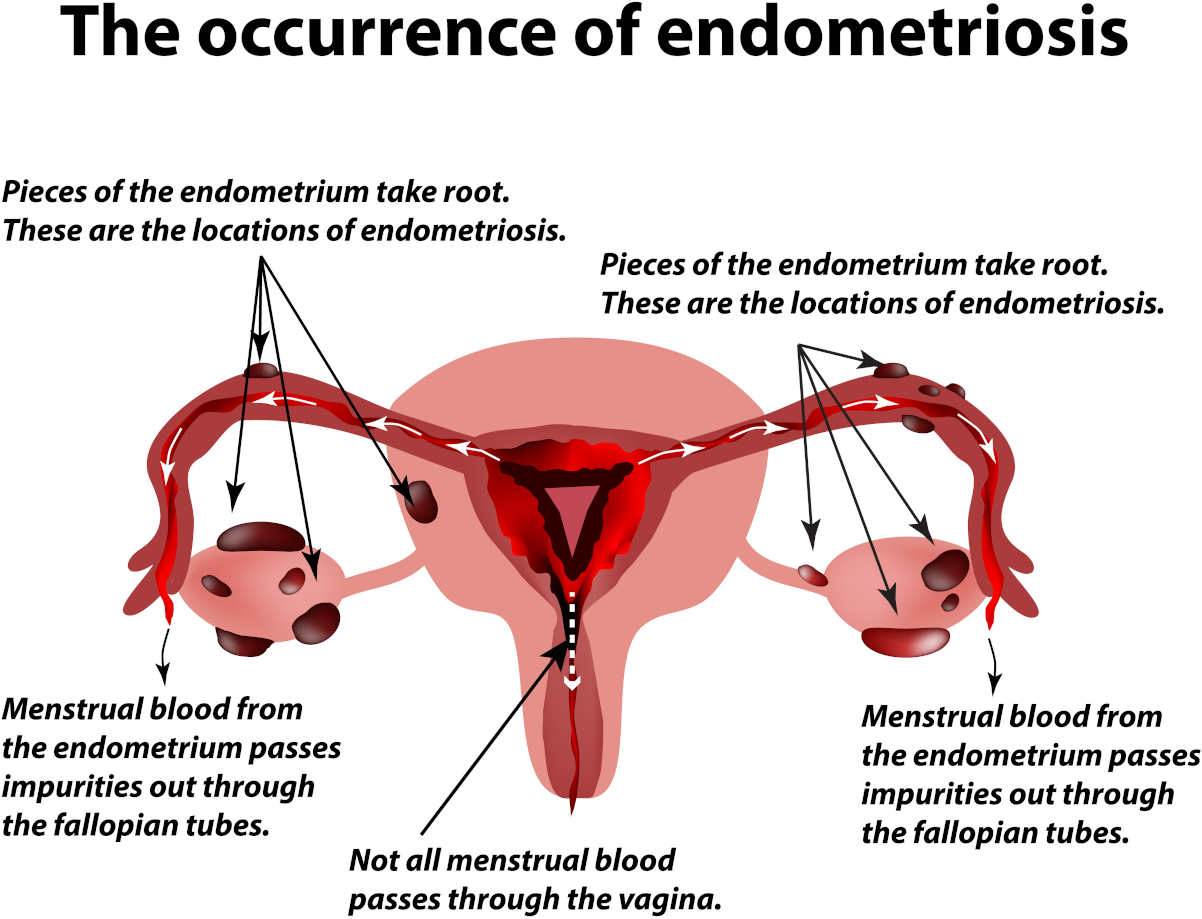
Endometriosis most commonly occurs in the pelvis. Sites can include:
- the ovaries;
- the pelvic lining;
- the fallopian tubes;
- tissues behind or around the uterus;
- the bowel;
- the bladder or urinary tract.
Endometriosis can also occur outside the pelvis. Thoracic endometriosis involving the chest is uncommon but recognised. Suspected endometriosis outside the pelvic cavity should be assessed through an appropriate specialist service.
Why does endometriosis happen? Current theories
Retrograde menstruation
One long-standing theory proposes that during menstruation some menstrual material flows backwards through the fallopian tubes into the pelvic cavity. This is known as retrograde menstruation.
Retrograde menstruation may contribute to the development of endometriosis in some people, but it does not adequately explain all cases and is not considered a complete explanation of the disease.
Cell transformation and cell-origin theories
Researchers have proposed that certain cells may transform into endometrium-like cells or that precursor cells may contribute to lesions. These mechanisms remain areas of scientific investigation.
Immune and inflammatory mechanisms
Endometriosis is associated with inflammation, and research is examining how immune regulation may affect the survival, growth and behaviour of endometriosis tissue. This does not mean that endometriosis has been proven to result from an “immune-system failure”.
Is endometriosis genetic or hereditary?
Genetics appears to contribute to the risk of endometriosis. NICE advises clinicians to ask about endometriosis in first-degree relatives because a family history increases the likelihood of the condition.
However, endometriosis is usually not inherited through a single gene. Many genetic variants and non-genetic factors are thought to contribute, which helps explain why one family member may develop endometriosis while another does not.
Do diet, Candida, toxins or dioxins cause endometriosis?
There is currently no proven special diet, detox programme or supplement protocol that removes the underlying cause of endometriosis.
Some people find that adjusting their diet helps with associated symptoms such as bloating or constipation. However, evidence for specific “endometriosis diets” remains limited, and what helps one person may not help another.
Candida or recurrent thrush is not an established cause of endometriosis. These are separate health issues and should be assessed on their own merits.
Researchers have investigated dioxins and other environmental exposures. Animal studies have generated scientific interest, but no direct causal relationship between typical human dietary exposure to dioxins and endometriosis has been established.
Do not use high-dose vitamins, herbs, or supplements as a substitute for evidence-based endometriosis assessment and treatment. Supplements may also interact with medicines or be unsuitable in pregnancy or when trying to conceive.
How is endometriosis diagnosed?
No single symptom proves someone has endometriosis. Diagnosis begins with symptom patterns and medical history and may involve examination, imaging, and sometimes laparoscopy.
Ultrasound
NICE recommends offering a transvaginal ultrasound scan to people with suspected endometriosis, even when an abdominal or pelvic examination is normal. If a transvaginal scan is unsuitable or is declined, doctors may consider a transabdominal pelvic ultrasound.
A normal ultrasound does not rule out endometriosis.
MRI
Specialist pelvic ultrasound or MRI may be used when deep endometriosis is suspected or when doctors need to assess its location and extent.
Laparoscopy
A laparoscopy is keyhole surgery that allows a gynaecologist to inspect the pelvis directly. NICE advises that laparoscopy can be considered when endometriosis is suspected, including when ultrasound or MRI findings are normal.
During laparoscopy, treatment may sometimes be performed at the same procedure if this has been discussed and consented to beforehand.
Endometriosis treatment
There is currently no treatment that guarantees a permanent cure for endometriosis. Treatment is chosen based on symptoms, individual priorities, side effects, fertility plans, and the location and extent of disease.
Pain relief
Pain-relieving medicines, including appropriate anti-inflammatory medicines, may be used to manage endometriosis-related pain.
Hormonal treatment
Hormonal treatments can reduce symptom frequency or severity for some people. Options may include combined hormonal contraception, progestogen-based treatments and other hormone-modifying medicines.
Choice of hormonal treatment depends partly on whether pregnancy is currently desired.
Surgery
Laparoscopic surgery may be offered to remove or treat endometriosis lesions, ovarian endometriomas or adhesions. Deep endometriosis involving the bowel, bladder or ureter may require care in a specialist endometriosis centre with several surgical specialities available.
Fertility treatment
When fertility is a priority, management should take pregnancy plans into account. Some people may benefit from surgery, while others may need specialist fertility assessment or assisted reproduction such as IVF.
When should you see a GP about possible endometriosis?
Speak to a GP if you think you may have endometriosis, particularly if pelvic or period-related symptoms are affecting everyday activities, work, education, relationships or quality of life.
A medical review is also appropriate if symptoms persist, return repeatedly, worsen, or do not improve with initial treatment.
Endometriosis: frequently asked questions
What causes endometriosis?
The exact cause is unknown. Research suggests that genetic, hormonal, inflammatory, immune and cellular mechanisms may all contribute. No single root cause has been proven.
What is the meaning of endometriosis?
Endometriosis is a chronic disease in which tissue similar to the lining of the uterus is present outside the uterus, usually with an associated inflammatory response.
Is endometriosis genetic?
Genetics contributes to risk. Having a first-degree relative with endometriosis increases the likelihood of the condition, but it is not normally caused by a single inherited gene.
Is endometriosis an autoimmune disease?
Endometriosis is not currently classified simply as an autoimmune disease. Research has identified immune and inflammatory abnormalities associated with the condition, but the exact role of these factors in causing the disease is still being studied.
Can Candida or thrush cause endometriosis?
Candida and recurrent thrush are not established causes of endometriosis. They are separate conditions and should be investigated and treated independently where necessary.
Can a normal ultrasound rule out endometriosis?
No. NICE specifically advises that endometriosis should not be excluded simply because examination or ultrasound findings are normal.
Can endometriosis be cured?
There is currently no guaranteed cure. Treatments can help control pain, manage symptoms, treat particular lesions and support fertility, but symptoms may persist or return.
Does everyone with endometriosis have severe period pain?
No. Symptoms vary substantially. Some people experience severe menstrual or pelvic pain, while others have mild symptoms or discover endometriosis during fertility investigations or other procedures.
Reliable information and specialist care matter
Endometriosis can be difficult to diagnose because symptoms vary and may overlap with other conditions. Persistent symptoms deserve appropriate medical assessment rather than self-treatment based on a single presumed cause.
Sources and further reading
- NHS: Endometriosis
- NICE: Endometriosis — diagnosis and management
- World Health Organisation: Endometriosis
- ESHRE: Guideline on Endometriosis
- Endometriosis UK: Endometriosis FAQs
This article provides general educational information and is not a diagnosis or a substitute for medical advice from a GP, gynaecologist or specialist endometriosis service.
