
Colon cancer symptoms can be easy to overlook because many of them are also caused by common, non-cancerous bowel conditions. However, unexplained bleeding, a persistent change in bowel habit, unexplained weight loss, abdominal symptoms or signs of anaemia should be assessed by a healthcare professional.
In the UK, the term bowel cancer is commonly used for cancer affecting the large bowel, including the colon and rectum. Having one or more possible symptoms does not mean that you have cancer. Nevertheless, early assessment matters because bowel cancer can be easier to treat when it is found at an earlier stage.
When to seek medical help
If you notice possible bowel cancer symptoms, contact your GP. NHS guidance advises urgent medical help for black or dark-red stools or bloody diarrhoea, and emergency help if rectal bleeding is heavy or does not stop.
Do not use colon hydrotherapy, supplements, dietary changes or other complementary treatments as a substitute for medical assessment of unexplained bowel symptoms.
Read the current NHS guidance on bowel cancer symptoms and when to get medical help.
What are the main colon cancer symptoms?
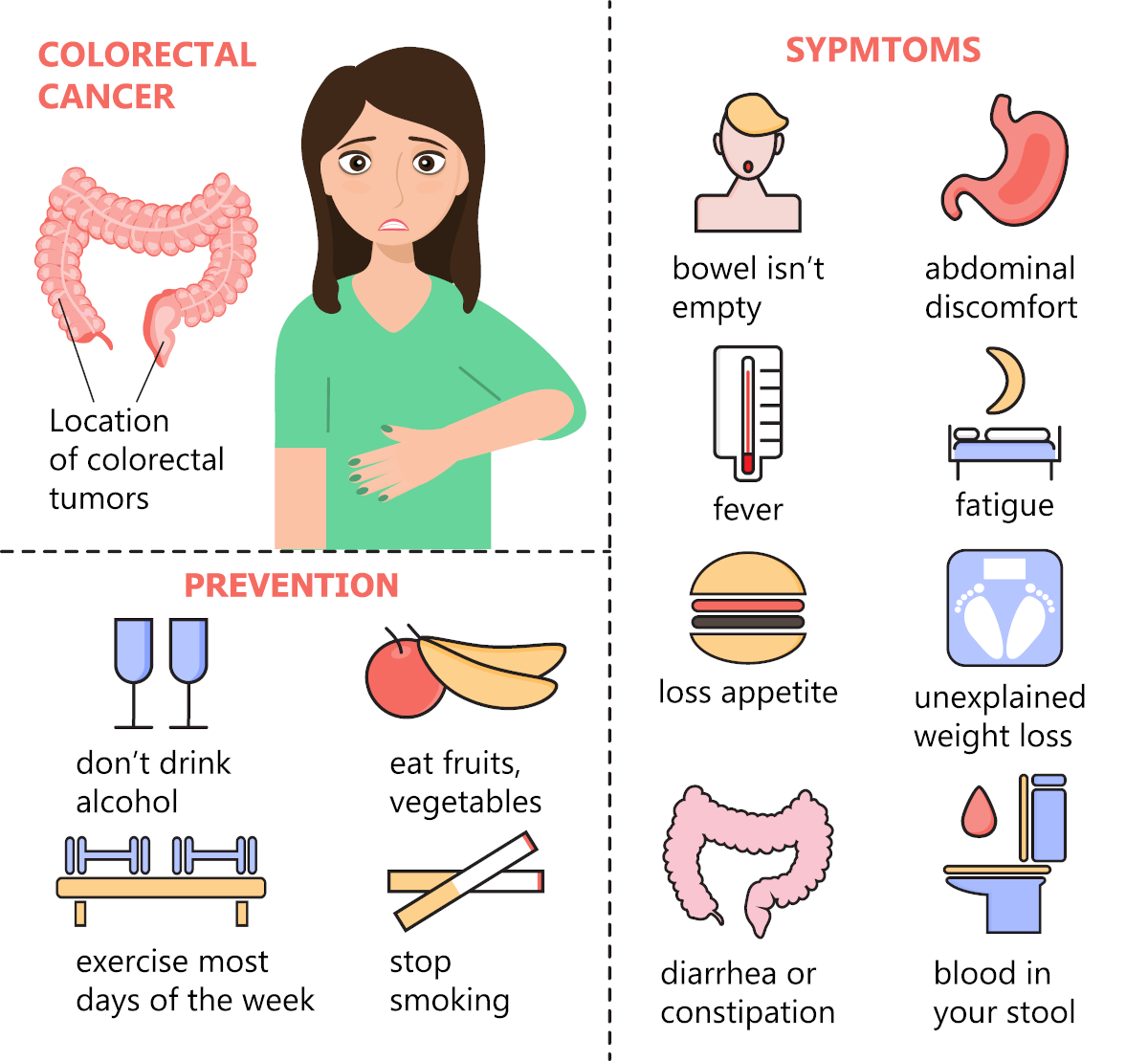
Possible symptoms of colon or bowel cancer can include:
- a change in your usual bowel habit, such as diarrhoea, softer stools or constipation that is unusual for you;
- needing to open your bowels more or less often than usual;
- blood in the stool, which may appear red, dark red or black;
- bleeding from the rectum;
- feeling that you still need to open your bowels after you have just been to the toilet;
- abdominal pain or persistent discomfort;
- bloating or a lump in the abdomen;
- unexplained weight loss; and
- persistent tiredness or shortness of breath, which can occur with anaemia.
These symptoms are not specific to cancer. Haemorrhoids, bowel infections, inflammatory bowel disease, irritable bowel syndrome, dietary changes and other conditions can cause similar problems. For this reason, consider symptoms alongside age, medical history, family history, examination findings, and appropriate tests.
Are colon cancer symptoms different in women?
The main symptoms of colon or bowel cancer are generally the same in women and men. These can include blood in the stool, rectal bleeding, a persistent change in bowel habit, abdominal pain or bloating, unexplained weight loss and tiredness caused by anaemia.
Some bowel symptoms can have other causes. Therefore, women should speak to a GP if symptoms are new, persistent, unexplained or different from what is normal for them rather than trying to determine the cause from symptoms alone.
Does a change in bowel habit mean cancer?
No. Changes in bowel habit are common and often have a non-cancerous explanation. However, a new or unexplained change should not simply be ignored, particularly when it occurs with rectal bleeding, unexplained weight loss, anaemia, persistent abdominal symptoms or other concerning features.
If constipation is your main concern, you can also read our guide to the common causes of constipation. That article provides general information and does not replace a GP assessment when symptoms are new, persistent, or concerning.
Why symptoms alone cannot diagnose bowel cancer
There is no single symptom that can confirm or exclude colorectal cancer. Research evaluating so-called alarm features has found that individual symptoms have limited diagnostic accuracy when used alone. Rectal bleeding and anaemia are among the most important features, while combinations of symptoms and the overall clinical picture help guide further investigation.
A 2023 systematic review and meta-analysis assessed alarm features including rectal bleeding, anaemia, change in bowel habit and weight loss. The authors concluded that these features should be interpreted as part of a comprehensive clinical assessment rather than as stand-alone diagnostic tests. View the study on PubMed.
How bowel cancer is investigated
If you speak to a GP about possible bowel cancer symptoms, the assessment may include questions about your symptoms, general health, medicines and family history. Depending on the circumstances, the GP may examine your abdomen, perform a rectal examination, arrange blood tests or request a stool test.
A faecal immunochemical test, usually called a FIT, looks for small amounts of blood in a stool sample. FIT is used in NHS bowel cancer screening and may also form part of the assessment of people with bowel symptoms.
Can a blood test diagnose bowel cancer?
No single routine blood test can diagnose bowel cancer on its own. However, a GP may arrange blood tests as part of assessing unexplained bowel symptoms. For example, a full blood count can identify anaemia or other blood changes that may support further investigation.
Research has found associations between several full blood count measurements and colorectal cancer, including haemoglobin and red blood cell measures. However, these findings are not specific enough to confirm or exclude cancer on their own. A blood test therefore needs to be interpreted alongside symptoms, examination findings, and other investigations. Read the systematic review on PubMed.
Can bowel cancer be checked without a colonoscopy?
Some parts of the assessment can be carried out without a colonoscopy. A faecal immunochemical test (FIT), for example, looks for small amounts of blood in a stool sample and is used both in NHS bowel cancer screening and to help assess some people with bowel symptoms.
However, FIT does not diagnose bowel cancer. If further investigation is required, the NHS describes colonoscopy as the main test used to examine the bowel when cancer is suspected. Colonoscopy also allows a small tissue sample, or biopsy, to be taken if an abnormal area is found.
In some circumstances, other investigations such as CT colonography may be considered when a conventional colonoscopy is not appropriate or cannot be completed. The most suitable investigation depends on the person’s symptoms, medical history, and clinical circumstances, and the healthcare team should decide. Read NHS information about bowel cancer tests and next steps.
Bowel cancer screening and FIT
In England, the NHS bowel cancer screening programme currently offers home FIT screening every two years to people aged 50 to 74. People aged 75 or over can request a screening kit every two years by contacting the NHS bowel cancer screening helpline.
Screening is designed to look for signs of bowel cancer in people who may not have symptoms. If you develop possible bowel cancer symptoms, do not wait for your next routine screening test and do not assume that a previous screening result explains a new symptom. Speak to your GP.
Read more about NHS bowel cancer screening and FIT.
Colon hydrotherapy and suspected bowel cancer
Colon hydrotherapy is not a test for bowel cancer, and it is not a cancer treatment. It should never delay investigation of rectal bleeding, unexplained changes in bowel habit, unexplained weight loss or other potentially significant symptoms.
Professional guidance from RICTAT identifies active colorectal cancer and other gastrointestinal malignancies among conditions in which colon hydrotherapy is not considered appropriate. RICTAT also emphasises the importance of pre-treatment consultation and screening for contraindications.
For further information, see Parkland Natural Health’s colonic irrigation contraindications and RICTAT guidance on colon hydrotherapy safety and contraindications.
The key message
Most bowel symptoms have causes other than cancer. Even so, don’t self-diagnose persistent or unexplained symptoms. Discuss blood in the stool, rectal bleeding, a new change in bowel habit, unexplained weight loss, abdominal symptoms, or signs of anaemia with a healthcare professional.
If you are worried about bowel cancer, your GP or NHS 111 can advise you on the appropriate next step. If bleeding is heavy or does not stop, seek emergency medical help.
Sources and further reading
- NHS: Symptoms of bowel cancer
- NHS: Tests and next steps for bowel cancer
- NHS: Bowel cancer screening
- PubMed: Clinical value of alarm features for colorectal cancer — systematic review and meta-analysis
- RICTAT: Colon hydrotherapy benefits and safety standards
- PubMed: Full blood count and colorectal cancer detection — systematic review and meta-analysis
This article is for general information only and is not a substitute for diagnosis or medical advice. Information checked against current NHS guidance and peer-reviewed literature in September 2026.