
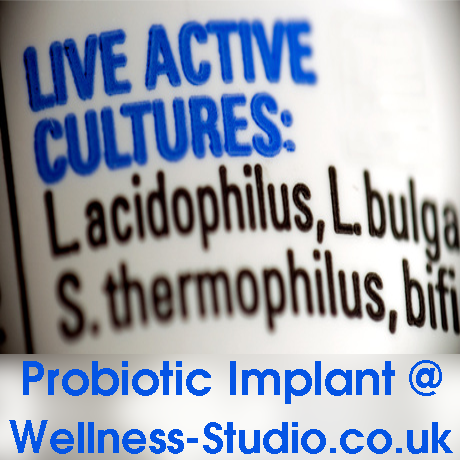
Probiotic implant and colonic irrigation
£167.71or£151.19 if booked online
Professional colonic irrigation with a high-strength multi-strain probiotic implant at Parkland Natural Health in Holborn, Central London.
The probiotic preparation is introduced directly into the lower bowel after the colonic. Each preparation contains more than 30 billion bacteria at manufacture and combines eight probiotic bacterial species.
- Popular after antibiotic treatment
- Direct lower-bowel probiotic delivery
- High-strength multi-strain preparation
- Consultation and suitability screening included
Our clinical experience includes before-and-after microbiome testing. In individual Parkland clients, tests after antibiotics showed disrupted bacterial profiles. Following a course of colon hydrotherapy with probiotic implants, repeat laboratory tests showed beneficial bacterial groups restored to the laboratory’s normal or healthy reference ranges.
Individual responses vary. These are real-world laboratory observations from individual Parkland clients rather than results from a controlled clinical trial.
Professional Care & Secure Booking
- Experienced Practitioners
- Convenient London Location
- Secure Online Booking
- Consultation & suitability screening included
- Full refund if screening shows the treatment is not suitable for you
Probiotic Implant and Colonic Irrigation in London
Our probiotic implant and colonic irrigation procedure combines professional colon hydrotherapy with the direct introduction of a high-strength multi-strain probiotic preparation into the lower bowel.
The procedure is available at Parkland Natural Health in Holborn, Central London. Your appointment includes consultation, suitability screening, colon hydrotherapy and the probiotic implant.
Why do clients choose this procedure?
Many clients consider a probiotic implant after antibiotic treatment, travel, major dietary changes or microbiome testing that has shown an unfavourable bacterial profile. Some also choose it as part of a planned course of colon hydrotherapy.
If this is your first treatment, you may also find our guide on what to expect from colon hydrotherapy useful before booking.
How Does the Probiotic Implant Work?
The probiotic implant is introduced after the colonic irrigation has finished. During the colonic, filtered water is introduced gently into the large bowel using our closed-system, gravity-fed approach.
At the end of the session, the therapist introduces the probiotic preparation directly into the lower bowel. Unlike an oral probiotic, it does not first need to pass through the stomach and small intestine before reaching the colon.
The procedure in four steps
- Consultation – we review your medical history, medicines and reasons for attending.
- Suitability screening – your therapist checks that colon hydrotherapy is appropriate for you.
- Colon hydrotherapy – the irrigation stage is completed first.
- Probiotic implant – the probiotic preparation is introduced directly into the lower bowel at the end of the session.
After Antibiotics: Supporting the Gut Microbiome
Antibiotics are essential medicines. However, they can also alter the intestinal microbiome. Alongside bacteria responsible for an infection, antibiotic treatment may reduce or change populations of beneficial bacteria in the gut.
The extent of this disruption varies between people. Recovery also differs from person to person and can depend on the antibiotic used, the length of treatment and the individual’s existing microbiome.
Published research has examined these changes in detail. A recent systematic review also looked at whether probiotic supplementation can help prevent or reverse antibiotic-related disruption of the gut microbiome.
PubMed: probiotics and antibiotic-related microbiome disruption
What Have Our Clients’ Microbiome Tests Shown?
Our clinical experience at Parkland Natural Health includes clients who had laboratory microbiome testing following antibiotic treatment.
In individual cases we have reviewed, initial tests showed a markedly disrupted bacterial profile. Important beneficial bacterial groups fell outside the laboratory’s stated normal or healthy ranges.
These clients subsequently completed a course of colon hydrotherapy with probiotic implants at Parkland Natural Health and later repeated their microbiome tests.
Before-and-after laboratory observations
Before the course: microbiome testing after antibiotics showed an unfavourable and disrupted bacterial profile.
After the course: repeat testing showed beneficial and probiotic bacterial groups restored to proportions within the testing laboratory’s normal or healthy reference ranges.
For Parkland, these before-and-after laboratory results provide objective support for the way we use probiotic implants following colon hydrotherapy.
These findings come from individual Parkland clients rather than a controlled clinical trial. They do not mean that every person will obtain an identical result. Microbiomes differ between individuals, and laboratories may also use different testing methods and reference ranges.
Our experience with medically referred clients is discussed in more detail in A Gastroenterologist Prescribes Colonic Irrigation.
What Is in the Probiotic Implant?
The implant contains a high-strength combination of bacteria normally associated with the human intestinal microbiota. According to the manufacturer’s specification, each preparation contains more than 30 billion bacteria at manufacture.
- Lactobacillus acidophilus – 45%
- Lactobacillus rhamnosus – 25%
- Streptococcus thermophilus – 10%
- Lactobacillus plantarum – 7%
- Bifidobacterium bifidum – 6%
- Bifidobacterium longum – 3%
- Lactobacillus bulgaricus – 3%
- Lactobacillus salivarius – 1%
The bacterial composition and percentages above follow the manufacturer’s specification for the probiotic preparation used by the clinic.
Probiotic Implant vs Oral Probiotics: What About SIBO?
Oral probiotics and probiotic implants take different routes. Oral probiotics pass through the stomach and small intestine before reaching the large bowel. A probiotic implant is introduced directly into the lower bowel after colon hydrotherapy.
This distinction may be particularly relevant to people with small intestinal bacterial overgrowth (SIBO).
Can Oral Probiotics Make SIBO Symptoms Worse?
The scientific evidence is mixed. One published clinical study reported an association between probiotic use, SIBO, bloating and brain-fog symptoms in a selected group of patients. However, other studies have examined probiotics as part of SIBO management, and systematic reviews have reported possible benefits in some patients.
For this reason, we do not claim that oral probiotics generally cause SIBO. However, taking increasingly large quantities of oral probiotics may not be appropriate for everyone, particularly if they appear to increase bloating, gas or abdominal discomfort.
At Parkland Natural Health, we are seeing more clients who have already received a medical diagnosis of SIBO. Some tell us that oral probiotic supplements increased their bloating or discomfort.
An important distinction
SIBO affects the small intestine. Our probiotic implant is delivered into the lower bowel.
We do not present probiotic implantation or colon hydrotherapy as a treatment for SIBO itself. People with suspected or confirmed SIBO should remain under the care of their GP or gastroenterologist.
What Happens After Medical Treatment for SIBO?
Doctors commonly use antibiotics to reduce bacterial overgrowth in confirmed SIBO. British gastroenterology guidance identifies rifaximin as the most extensively studied treatment and reports effectiveness in approximately 60–80% of patients with proven SIBO.
However, antibiotics can also affect the wider intestinal microbiome. This creates a separate question after successful SIBO treatment: how should the bacterial environment of the large bowel be supported afterwards?
Some Parkland clients therefore choose probiotic implant and colonic irrigation after completing their prescribed antibiotic treatment. The probiotic preparation is introduced directly into the lower bowel rather than travelling through the stomach and small intestine first.
This does not replace medical SIBO treatment. It is a separate, complementary approach aimed at supporting the bacterial environment of the large bowel following antibiotic use.
Medical research on SIBO and probiotics
Research remains mixed. One clinical study reported an association between probiotic use, SIBO and symptoms in a selected group. Other research has found potential benefits from probiotics in some people with SIBO.
This supports an individual approach rather than assuming that either oral probiotics or probiotic implants will produce the same result for every person.
PubMed: probiotics, SIBO, bloating and brain fog
PubMed: systematic review of probiotics and SIBO
British Society of Gastroenterology guidance
Who May Consider a Probiotic Implant?
This procedure may be of interest to clients who:
- have recently completed a course of antibiotics;
- have experienced major dietary changes or travel;
- have microbiome testing showing an unfavourable bacterial profile;
- want to introduce a multi-strain probiotic preparation directly into the lower bowel;
- already use colon hydrotherapy and want to include probiotic implantation in their programme;
- have completed medical treatment for SIBO and wish to discuss post-antibiotic microbiome support;
- have discussed colon hydrotherapy or microbiome support with their GP or gastroenterologist.
For more information about medical referrals and professional opinion, see Do Doctors Recommend Colonic Irrigation?
Professional Screening and Medical Care
Colon hydrotherapy is not suitable for everyone. Every new client therefore receives a consultation and suitability screening before treatment.
Please review our colonic irrigation contraindications and suitability information before booking, particularly if you have an existing medical condition or have recently undergone surgery.
Please tell your therapist about current medicines, recent surgery or hospital treatment, bowel conditions, heart or kidney conditions, pregnancy, rectal bleeding, significant abdominal pain or unexplained changes in bowel habits.
If your medical history suggests that further assessment should come first, we may postpone treatment and ask you to speak to your GP, gastroenterologist or another appropriate healthcare professional.
If you are currently taking prescribed antibiotics, continue to follow the instructions of the healthcare professional who prescribed them. Do not stop or alter prescribed medication in order to have colon hydrotherapy.
Why Choose Parkland Natural Health?
- Central London clinic in Holborn
- Professional colon hydrotherapy since 2005
- Closed-system, gravity-fed approach
- Consultation and suitability screening
- High-strength multi-strain probiotic implant
- Experienced colon hydrotherapists
- Experience with clients referred by GPs and specialist doctors, including gastroenterologists
- Real-world experience with before-and-after client microbiome testing
Have you already had a microbiome test?
Please bring a copy of your results to your appointment. Where both pre-treatment and follow-up results are available, they can provide useful information about changes in your bacterial profile over time.
If you would like to compare this procedure with our other options, view all colonic irrigation treatments in London.
Book Probiotic Implant and Colonic Irrigation in London
Your appointment includes consultation, suitability screening, professional colon hydrotherapy and the high-strength multi-strain probiotic implant.
Medical information: Colon hydrotherapy and probiotic implantation are complementary procedures. They do not replace medical diagnosis, prescribed antibiotics or care from your GP or gastroenterologist. Individual responses vary.
4 reviews for Probiotic implant and colonic irrigation
Related products
-
20% off

Food intolerance test of 208 ingredients
Original price was: £199.00.£159.00Current price is: £159.00. 15 minutes -
16% off

Mini Detox – 3 Colonic Irrigation Course
Original price was: £334.14.£280.78Current price is: £280.78. 60 minutes -
10% off

Anti-Parasite Herbal Implant & Colonic Irrigation
Original price was: £125.78.£113.07Current price is: £113.07. 60 minutes -
10% off

One colonic irrigation session including consultation
Original price was: £111.80.£100.37Current price is: £100.37. 60 minutes
Joe Yarde –
Excellent service & knowledge
Barry Hall –
After surgery for the removal of a brain tumour, I lost the brain-gut nerve connection The effect of which was to leave me in a state of permanent constipation.
Over the years i tried all sorts of therapies and had exhaustive investigations and in the end was offered a Colostomy and a stoma, ie remove the colon and be fitted with an external pouch.
Then I discovered the Wellness Clinic and found a saviour! Two things impressed me straight away – the first thing was that Anatoli, had a real grasp of anatomy and secondly he possessed a wide knowledge of medical conditions that affect the bowels. He understood my condition and things started to change from the first treatment..
It was like I had been liberated from a curse that had plagued me for twenty years!
In the beginning I had an intense course of colonics and felt immediately like a new man. My old energy levels and positive outlook on life returned. The great thing was Anatoli was there to answer my questions and was always so full of encouragement.
After 5 years of regular treatment, an amazing thing happened – I had a natural motion! Somehow the gut-brain link began to flicker into life … now I have a normal easy bowel movement almost every day. I still go to Anatoli for regular ‘check-ups’, but with his care my life has improved beyond measure.
He is a real professional, outstanding in his field. I cannot recommend him highly enough.*
Roger Dean –
I was very happy with my treatment at the Wellness Studio. My therapist was extremely knowledgable and experienced, making the whole experience completely stress free. I would recommend it to anyone.*
Marija Karpina –
Good and knowledgeable staff. It’s good that they use closed colonic system and only disposable accessories. The location is perfect. I recommend this place to all my friends who are looking to stay healthy and feel good.*