
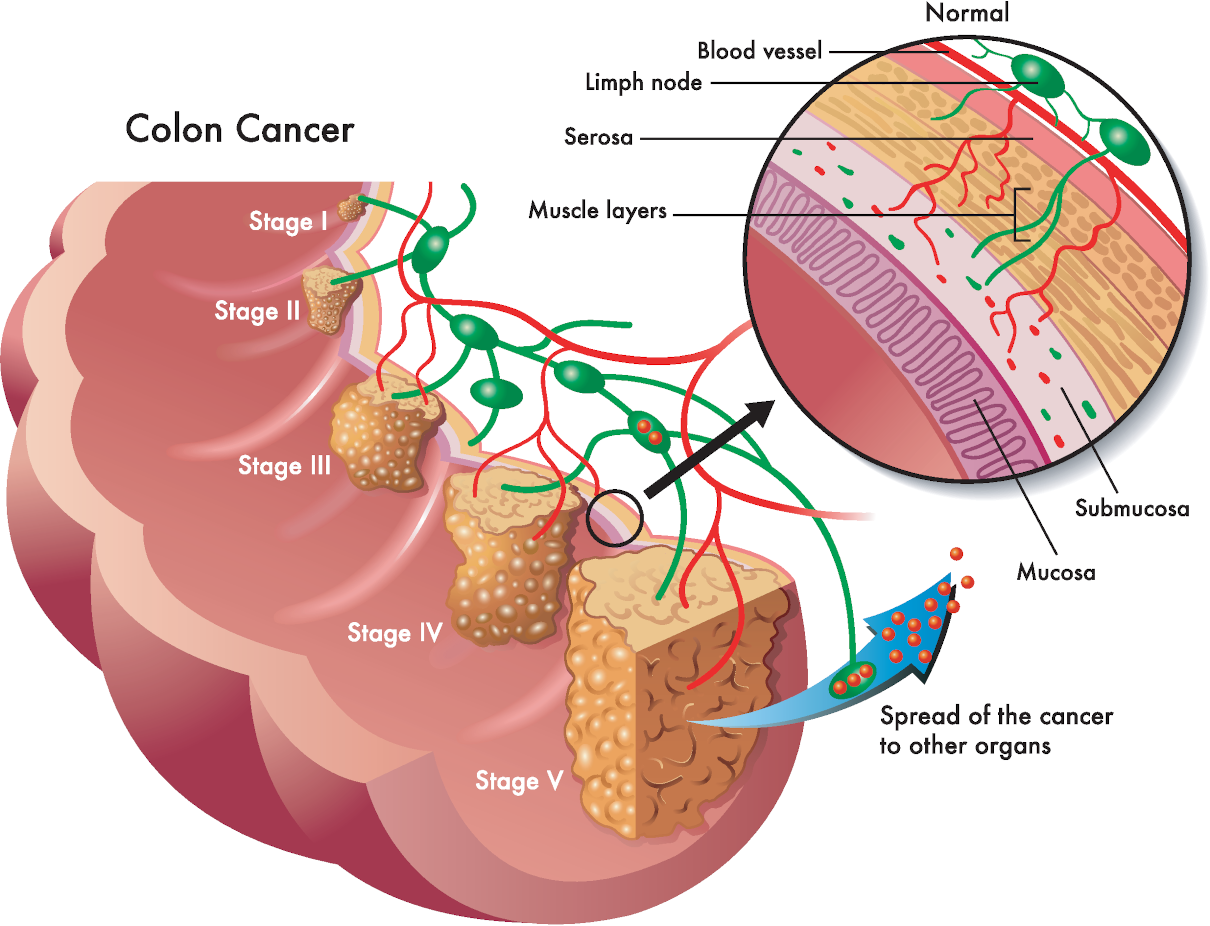
Stage 4 bowel cancer means that cancer which started in the colon or rectum has spread to another part of the body. Doctors also call it metastatic colorectal cancer or metastatic bowel cancer.
Stage 4 is the most advanced numbered stage. However, it does not describe one single situation. Some people have cancer in one distant area, while others have disease in several places. Treatment and prognosis can therefore differ greatly between individuals.
Stage 4 bowel cancer at a glance
- Stage 4 means bowel cancer has spread to a distant part of the body.
- The liver and lungs are common sites of spread.
- Around 10% of people with stage 4 bowel cancer in the England survival dataset lived for at least 5 years after diagnosis.
- Chemotherapy, surgery, targeted medicines, immunotherapy and radiotherapy may all play a role.
- Some people with limited metastatic disease may have surgery or another local treatment.
- Molecular tests can help doctors select treatments for particular tumours.
What does stage 4 bowel cancer mean?
Bowel cancer usually means cancer that starts in the colon or rectum. Doctors call these cancers colorectal cancers.
Stage 4 means cancer cells have travelled beyond the original bowel tumour and established cancer in another part of the body. Doctors call these areas metastases.
Bowel cancer can spread through the bloodstream or lymphatic system. The liver and lungs are common sites, although cancer can also spread to lymph nodes, the lining of the abdomen and other areas.
What is the survival rate for stage 4 bowel cancer?
In England, around 10 out of every 100 people with stage 4 bowel cancer survive their cancer for 5 years or more after diagnosis.
These figures come from people diagnosed between 2016 and 2020 and followed up to 2021. They describe net survival for a large group of patients. They do not predict exactly what will happen to one individual.
10% does not mean “10% chance for you”
Population survival figures combine people with many different cancers, treatment options and health backgrounds. An oncology team can assess an individual prognosis more accurately because it has access to scans, pathology, molecular results, treatment response and general health.
Read our complete guide to bowel cancer survival rates and prognosis by stage.
What affects stage 4 bowel cancer prognosis?
The stage alone cannot explain a person’s full outlook. Doctors look at several clinical and tumour-related factors.
| Factor | Why it matters |
|---|---|
| Where the cancer has spread | Limited disease in one organ can offer different treatment possibilities from widespread disease. |
| Number and size of metastases | Doctors assess whether local treatment or surgery could remove or control them. |
| General health and fitness | This can influence which treatments a person can safely receive. |
| Response to treatment | Some cancers shrink or remain controlled for longer than others. |
| RAS and BRAF status | These tumour changes can affect treatment selection and prognosis. |
| MSI or mismatch-repair status | Some MSI-high or MMR-deficient cancers can respond to immunotherapy. |
NICE recommends testing for RAS and BRAF V600E mutations in people with metastatic colorectal cancer who may receive systemic anticancer treatment. Molecular information now plays an important role in selecting treatment.
Where can metastatic bowel cancer spread?
The liver is one of the most common places for bowel cancer to spread. This happens partly because blood from the bowel travels directly towards the liver.
The lungs are another common site. Cancer can also involve distant lymph nodes, the peritoneum that lines the abdomen, bones or other organs.
The site of spread matters because it can influence treatment. For example, specialist teams can consider surgery for selected liver metastases. They can also consider surgery, ablation or stereotactic radiotherapy for selected lung metastases.
Can stage 4 bowel cancer be treated?
Yes. Stage 4 bowel cancer can have several treatment options. The goals depend on the extent of the cancer and the individual situation.
For some people, treatment aims to shrink or control the cancer, reduce symptoms and help them live longer. In selected cases with limited metastatic disease, specialist teams may use surgery or another local treatment with a more ambitious aim.
A multidisciplinary team reviews scans, pathology, previous treatment and molecular test results before recommending a plan.
Chemotherapy for metastatic bowel cancer
Chemotherapy travels through the bloodstream, so it can treat cancer cells in different parts of the body.
Doctors may use chemotherapy to shrink metastatic bowel cancer, slow its growth or relieve symptoms. They may also use chemotherapy before surgery when they plan to remove liver metastases.
The choice of drugs depends on previous treatment, tumour characteristics, general health and the overall treatment plan.
Targeted medicines for stage 4 colon cancer
Targeted medicines act on particular biological features of cancer cells. Therefore, doctors often need molecular test results before they choose a treatment.
For example, NICE recommends cetuximab or panitumumab with particular chemotherapy regimens for some people with RAS wild-type metastatic colorectal cancer.
For metastatic cancers with a BRAF V600E mutation, NICE also provides targeted treatment options after previous systemic treatment.
More recent treatment choices have expanded further. NICE now also recommends bevacizumab with fluoropyrimidine-based chemotherapy in certain situations where other targeted treatments or immunotherapy are unsuitable.
Immunotherapy for metastatic bowel cancer
Immunotherapy can help the immune system recognise and attack cancer cells. However, it does not suit every colorectal cancer.
People whose tumours have high microsatellite instability (MSI-high) or mismatch-repair deficiency (MMRd) can have particular immunotherapy options.
NICE currently recommends nivolumab with ipilimumab as an option for untreated unresectable or metastatic colorectal cancer with high MSI or MMR deficiency. Pembrolizumab also remains an option for appropriate patients.
Research increasingly treats metastatic colorectal cancer as a group of biologically different diseases rather than one identical condition. Modern reviews highlight RAS, BRAF, HER2 and MSI among important biomarkers that can guide personalised therapy.
Can surgery help with stage 4 bowel cancer?
Sometimes. Stage 4 does not automatically mean that surgery has no role.
NICE advises specialist multidisciplinary teams to consider surgery for suitable colorectal cancer metastases in the liver. Doctors may combine liver surgery with systemic anticancer treatment.
For suitable lung metastases, NICE also advises teams to consider metastasectomy, ablation or stereotactic body radiotherapy.
These treatments only suit selected patients. The number and position of metastases, other areas of disease and overall fitness all influence the decision.
What if surgery cannot remove the cancer?
Many people with metastatic bowel cancer cannot have surgery to remove all visible disease. Nevertheless, treatment can still provide meaningful benefit.
Chemotherapy, targeted medicines and immunotherapy can sometimes control cancer for a period of time. Radiotherapy can also shrink selected areas or relieve symptoms.
Doctors may also treat specific problems directly. For example, a bowel stent or surgery can sometimes relieve an obstruction.
Stage 4 bowel cancer symptoms and supportive care
Symptoms depend partly on where the cancer has spread. People may experience tiredness, reduced appetite, pain, weight loss or bowel symptoms. Liver or lung metastases can cause other symptoms.
Supportive and palliative care can help at any stage of metastatic cancer. It does not mean that active cancer treatment has stopped. These teams can help manage pain, sickness, bowel problems, appetite changes and other symptoms while oncology treatment continues.
Is stage 4 small bowel cancer the same thing?
No. Small bowel cancer starts in the small intestine and is a different disease from colorectal cancer.
In UK cancer information, “bowel cancer” usually refers to cancer of the colon or rectum. Cancer Research UK covers small bowel cancer separately because its tumour types, treatment and statistics can differ.
If your diagnosis says small bowel or small intestine cancer, use information written specifically for that cancer rather than colorectal survival figures.
Questions to ask your oncology team
Stage 4 disease can vary so much that general statistics only provide part of the picture. Useful discussions with your medical team may include where the cancer has spread, whether local treatment is possible, which molecular tests have been completed and what the aim of each treatment is.
You can also ask how your team will judge whether treatment is working and what other options may remain if the first treatment stops working.
Understanding treatment and testing
If you want to understand the wider pathway, our related guides explain the main diagnostic and treatment options.
Read about FIT, colonoscopy, biopsy, blood tests and scans used to investigate bowel cancer.
Read our guide to bowel cancer symptoms and warning signs.
Colon hydrotherapy and stage 4 bowel cancer
Colon hydrotherapy does not treat metastatic bowel cancer, improve survival or replace oncology care.
Active cancer, bowel obstruction, recent bowel surgery and some cancer treatments can also make colon hydrotherapy inappropriate. Anyone receiving treatment for stage 4 bowel cancer should therefore speak with their oncology or surgical team before considering a complementary bowel treatment.
At Parkland Natural Health in Holborn, we take suitability seriously. Every colonic appointment includes a private consultation and medical screening. If your health history makes treatment unsuitable, we do not proceed.
For people whose doctors have completed the necessary medical investigation and who have no contraindication, colon hydrotherapy remains a separate bowel-wellbeing service, not a cancer therapy. Our clinic uses a closed-system, gravity-fed method with an emphasis on privacy, comfort and individual care.
Frequently asked questions about stage 4 bowel cancer
Does stage 4 bowel cancer always mean terminal cancer?
Not necessarily. Stage 4 means the cancer has spread to a distant site. Some people can receive treatment for many years, while selected people with limited metastases may have surgery or other local treatments. The oncology team can explain the individual situation.
Can stage 4 bowel cancer go into remission?
Some treatments can produce a strong response, and selected patients can have all visible disease treated. However, outcomes vary widely. Your oncology team can explain what treatment is aiming to achieve in your case.
How long can someone live with metastatic bowel cancer?
There is no single answer. Survival can vary from person to person according to the extent and biology of the cancer, treatment options, response to therapy and general health. Population survival percentages cannot provide an exact life expectancy.
Is stage 4 colon cancer the same as metastatic colon cancer?
Usually, yes. Stage 4 colon cancer means colon cancer has spread to a distant part of the body, which doctors describe as metastatic disease.
Trusted medical and scientific sources
This article draws on current UK guidance and peer-reviewed research. See Cancer Research UK survival statistics, Cancer Research UK metastatic bowel cancer treatment, NICE colorectal cancer guidance, and the 2025 PubMed review on biomarker-driven personalised therapy in metastatic colorectal cancer.
Medical information notice: This article provides general information about stage 4 bowel cancer. It cannot predict an individual prognosis or replace advice from an oncology, colorectal or surgical team. Treatment choices depend on the individual cancer and medical circumstances.
