
CHRONIC GASTRITIS — EVIDENCE-BASED GUIDE
What is chronic gastritis?
Chronic gastritis is long-term inflammation of the stomach lining. It can develop gradually and may persist for months or years unless the underlying cause is identified and treated.
Some people with chronic gastritis have indigestion, upper-abdominal discomfort, nausea or a feeling of fullness. However, others have few or no symptoms, and the condition is discovered during testing for another reason.
The most important causes include Helicobacter pylori (H. pylori) infection and autoimmune gastritis. Medicines such as non-steroidal anti-inflammatory drugs (NSAIDs), alcohol and bile reflux can also damage the stomach lining. However, some of these conditions are better described as reactive gastropathy than inflammatory gastritis.
For an overview of where the stomach sits within the digestive tract, see our guide to stomach anatomy and function.
It may cause no symptoms
Many people with gastritis have no obvious symptoms, so symptoms alone cannot confirm or rule out the condition.
H. pylori is a major cause
H. pylori infection is one of the most important causes of chronic gastritis and can persist for years if it is not treated.
Treatment depends on the cause
No single treatment fits every form of gastritis. Identifying the cause is important before deciding on treatment.

One colonic irrigation session including consultation
Closed-system colonic irrigation in Holborn, Central London, with consultation and suitability screening included. A popular first appointment for clients looking to feel less bloated, lighter and more comfortable, or seeking support for constipation, trapped wind and a sluggish or irregular bowel. Book online and save 10%.
Chronic gastritis symptoms
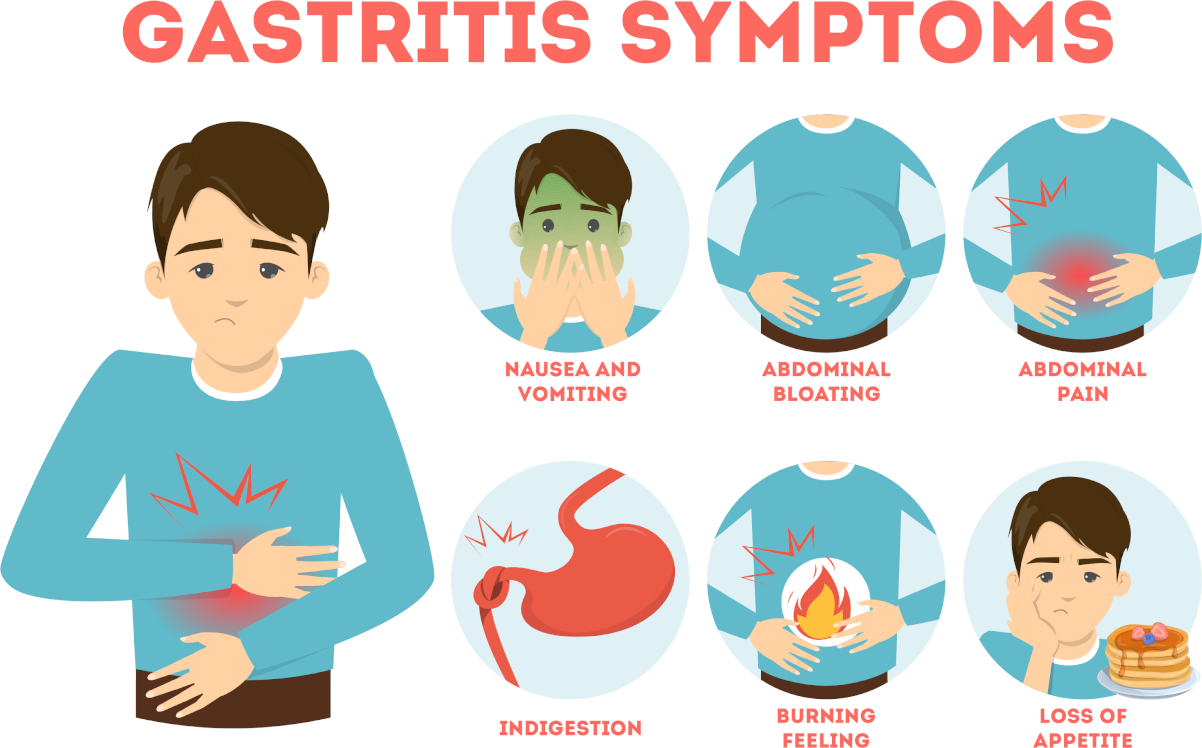
Chronic gastritis does not always cause symptoms. When symptoms occur, they often overlap with indigestion or dyspepsia and cannot by themselves identify the exact cause.
- pain, burning or discomfort in the upper abdomen;
- indigestion;
- feeling full or bloated after eating;
- feeling full sooner than expected during a meal;
- nausea;
- vomiting;
- reduced appetite;
- unintentional weight loss in some cases.
Because these symptoms can occur with several different digestive conditions, persistent or recurrent symptoms should not automatically be assumed to be gastritis.
When gastritis symptoms may need urgent medical attention
Seek urgent medical help if you vomit blood or material that resembles coffee grounds, or if your stool becomes black, sticky and unusually foul-smelling. Sudden severe abdominal or chest pain also requires urgent assessment.
Seek medical advice if symptoms persist or worsen, or if you develop unexplained weight loss, difficulty swallowing, persistent vomiting, loss of appetite, or a feeling of fullness after very little food.
What causes chronic gastritis?
H. pylori gastritis
Helicobacter pylori is a bacterium that can infect the stomach lining. H. pylori gastritis is commonly chronic and may remain present for many years if the infection is not eradicated.
Long-standing H. pylori infection is associated with peptic ulcer disease and, in some people, changes in the stomach lining that increase the future risk of stomach cancer.
Autoimmune gastritis
In autoimmune gastritis, the immune system attacks cells in the stomach lining. Over time, this may affect the stomach’s ability to produce normal gastric secretions and may contribute to iron or vitamin B12 deficiency.
NSAIDs and other irritation
Regular use of NSAIDs such as ibuprofen or aspirin can damage the stomach lining. Alcohol and bile reflux can also irritate it. These injuries are often described medically as reactive gastropathy, in which the lining is damaged with relatively little inflammation.
If you take aspirin, ibuprofen or another anti-inflammatory medicine regularly, do not stop prescribed medication without discussing it with a doctor or pharmacist.
Alcoholic gastritis: how alcohol affects the stomach lining
Alcoholic gastritis is a common search term for stomach irritation associated with alcohol. Alcohol can irritate and damage the gastric lining, particularly when large amounts are consumed.
In modern medical terminology, alcohol-related injury may sometimes be classified as reactive or erosive gastropathy rather than true inflammatory gastritis. The distinction depends on the pattern of damage and what is seen under the microscope on biopsy.
If alcohol is contributing to stomach symptoms, reducing or avoiding alcohol may be part of treatment. Persistent pain, vomiting, bleeding or recurrent symptoms should be medically assessed rather than managed by alcohol avoidance alone.
Types of chronic gastritis and terms you may see on a biopsy report
Gastritis can be described in different ways depending on its cause, location and microscopic appearance. Your doctor should always interpret a pathology report together with your symptoms, test results, and medical history.
| Term | What it generally means |
|---|---|
| Chronic active gastritis | Long-standing inflammation with signs of ongoing active inflammation. H. pylori is one important possible cause. |
| Atrophic gastritis | Long-standing inflammation has led to loss of some normal stomach glands. H. pylori and autoimmune gastritis are important causes. |
| Mild or moderate chronic gastritis | These terms describe the degree of inflammation seen in the tissue sample rather than a separate disease. |
| Superficial gastritis | An older, descriptive term for inflammation concentrated closer to the surface of the stomach lining. |
| Pangastritis | Inflammation involving a broad area of the stomach rather than being confined to one region. |
Chronic gastritis diagnosis
Symptoms alone cannot reliably diagnose chronic gastritis. A doctor will consider your symptoms, medicines, alcohol use, medical history and any previous digestive conditions before deciding which tests are appropriate.
Testing for H. pylori
H. pylori can be investigated with tests such as a urea breath test or stool antigen test. NICE recommends appropriate preparation before testing because medicines such as proton pump inhibitors can affect test accuracy.
Gastroscopy and biopsy
When further investigation is needed, a gastroenterologist may perform an upper gastrointestinal endoscopy, commonly called a gastroscopy. This allows direct examination of the stomach lining and the collection of small biopsy samples for microscopic examination.
Biopsy can help distinguish different patterns of gastritis, identify H. pylori in some cases and detect changes such as atrophy or intestinal metaplasia.
Chronic gastritis treatment
Treatment for chronic gastritis depends on the underlying cause. This is why an accurate diagnosis is more useful than treating symptoms alone.
H. pylori treatment
When H. pylori infection is confirmed, treatment usually involves a combination of medicines to eradicate the bacteria and reduce stomach acid. A healthcare professional should choose the exact antibiotic regimen because antibiotic resistance and previous antibiotic exposure matter.
Reducing stomach acid
Proton pump inhibitors, H2-receptor antagonists, and other acid-reducing medicines may be used when appropriate to reduce irritation and help symptoms or damaged tissue heal.
Reviewing NSAID use
If an NSAID is contributing to gastric damage, a doctor may review whether it can be stopped, reduced or changed, or whether stomach-protective treatment is appropriate.
Autoimmune gastritis
Autoimmune gastritis may require monitoring and treatment of iron, folate or vitamin B12 deficiency. Some people require vitamin B12 injections if pernicious anaemia develops.
Is there a special diet for chronic gastritis?
There is no single diet that cures chronic gastritis, and research does not show that diet is the main cause of most forms of gastritis.
However, individual foods and drinks can worsen indigestion or stomach discomfort in some people. NHS advice includes limiting or avoiding personal triggers such as alcohol, smoking, very fatty or spicy foods, acidic drinks and excessive caffeine where these aggravate symptoms.
If H. pylori, autoimmune disease, or medication-related damage causes chronic gastritis, dietary changes do not replace treatment of the underlying cause.
Gastritis, constipation and bloating
People often search for gastritis and constipation together. Bloating and feeling unusually full can occur with gastritis, but constipation is not considered a defining symptom.
If constipation occurs at the same time as upper-stomach symptoms, it may have a separate cause or may relate to diet, medicines or another digestive condition. Therefore, persistent constipation should not automatically be attributed to gastritis.
Likewise, diarrhoea is not a typical defining feature of chronic gastritis. Prominent diarrhoea may suggest another gastrointestinal problem and should be assessed in the context of the overall clinical picture.
Chronic gastritis vs chronic gastroenteritis
Gastritis and gastroenteritis are not the same condition.
Gastritis refers specifically to inflammation of the stomach lining. Gastroenteritis usually refers to inflammation or infection affecting the stomach and intestines and commonly causes diarrhoea and vomiting.
If symptoms are dominated by persistent diarrhoea, recurrent vomiting or changes in bowel habit, it is important not to assume that chronic gastritis is the cause.
Can chronic gastritis be serious?
Many cases can be successfully managed once the cause is identified. However, some forms of long-standing gastritis deserve medical follow-up.
Chronic H. pylori gastritis and autoimmune gastritis can contribute to atrophic gastritis. These conditions may also be associated with iron deficiency, vitamin B12 deficiency or pernicious anaemia.
Long-standing H. pylori gastritis and certain forms of atrophic or autoimmune gastritis are associated with an increased risk of stomach cancer. This does not mean that everyone with chronic gastritis will develop cancer, but it is one reason why the underlying cause and any biopsy findings should be properly assessed.
Can colon hydrotherapy treat chronic gastritis?
No reliable evidence shows that colon hydrotherapy treats chronic gastritis. Gastritis affects the stomach lining, whereas colon hydrotherapy works with the large bowel’s contents.
At Parkland Natural Health, we do not present colon hydrotherapy as a treatment for gastritis, and it should not replace medical investigation, H. pylori testing, prescribed medicines, or gastroenterology care.
If you are researching colon hydrotherapy separately for bowel-wellbeing reasons, you can read about large-intestine anatomy and function or view our colon hydrotherapy treatments in Holborn.
Chronic gastritis: frequently asked questions
What is chronic gastritis?
Chronic gastritis is long-term inflammation of the stomach lining. Common causes include H. pylori infection and autoimmune gastritis.
Can chronic gastritis go away?
It depends on the cause. H. pylori gastritis can improve when the infection is successfully eradicated, while autoimmune gastritis usually requires longer-term monitoring and management rather than treatment of an infection.
Can alcohol cause gastritis?
Alcohol can irritate and damage the stomach lining. Depending on the pattern of injury, doctors may describe this as gastritis, erosive gastropathy or reactive gastropathy.
Can chronic gastritis cause constipation?
Constipation is not a typical defining symptom of gastritis. Someone can have both conditions at the same time, but persistent constipation should not automatically be assumed to be caused by stomach inflammation.
Is chronic gastritis the same as chronic gastroenteritis?
No. Gastritis affects the stomach lining. Gastroenteritis generally affects the stomach and intestines and commonly causes vomiting and diarrhoea.
What does chronic active gastritis mean?
It is a pathology term indicating long-standing inflammation with ongoing active inflammatory changes. H. pylori is one possible cause, but the biopsy result should be interpreted with the rest of the clinical information.
When should a doctor check gastritis symptoms?
Seek medical advice for persistent, worsening or recurrent symptoms, especially with unexplained weight loss, persistent vomiting, difficulty swallowing, reduced appetite or early fullness. Vomiting blood, black sticky stool or sudden severe pain requires urgent medical attention.
Learn more about the digestive system
Chronic gastritis affects the stomach, not the bowel. Explore our anatomy guides to see how the stomach connects with the rest of the digestive tract.
Sources and further reading
- NHS: Gastritis
- NIDDK: Gastritis & Gastropathy
- NIDDK: Symptoms & Causes of Gastritis & Gastropathy
- NIDDK: Diagnosis of Gastritis & Gastropathy
- NIDDK: Treatment of Gastritis & Gastropathy
- NICE: Dyspepsia and gastro-oesophageal reflux disease in adults
This article provides general educational information and is not a diagnosis or a substitute for individual medical advice. An appropriate healthcare professional should assess persistent, recurrent, or severe upper gastrointestinal symptoms.
